🦝 Raccoon Day
The forgotten cousin of Groundhog Day
Raccoon Day Theme
Autoplay will attempt on page load. If blocked by the browser, pressing play will start it instantly.
Long before calendars were fixed and holidays given names...
There existed a quieter observance—one whispered through forests, kitchens, and the hidden spaces between civilization and wilderness.
It was known only as Raccoon Day.
Unlike its better-known cousin, Groundhog Day, which looked to shadows and seasons, Raccoon Day concerned itself with something far more sacred:
Fortune. Perseverance. And the unseen balance between effort and reward. In old woodland telling, the raccoon was not merely a scavenger, but a watcher of gifts, effort, and destiny.
🌿 The Ancient Belief
According to old woodland folklore, when Easter weekend approached—when the earth softened and life returned—raccoons would emerge not merely in search of food, but in quiet judgment.
They were believed to be keepers of opportunity, drawn to the scent of baked goods— symbols of human labor, care, and intention.
Those who prepared something by hand and left it beneath the open sky were said to participate in a silent exchange:A small offering… for a lifetime of unseen blessings.
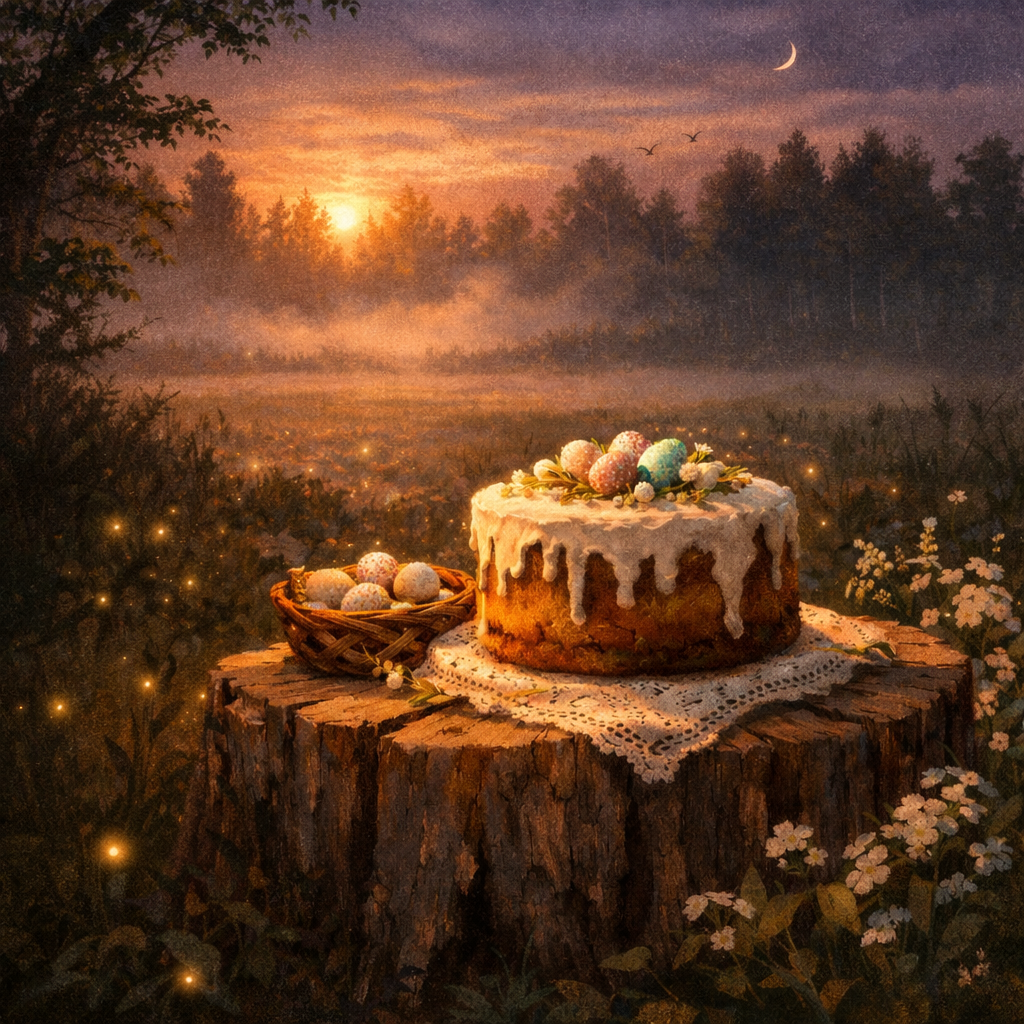 The offering is placed outdoors, where nature may bear witness.
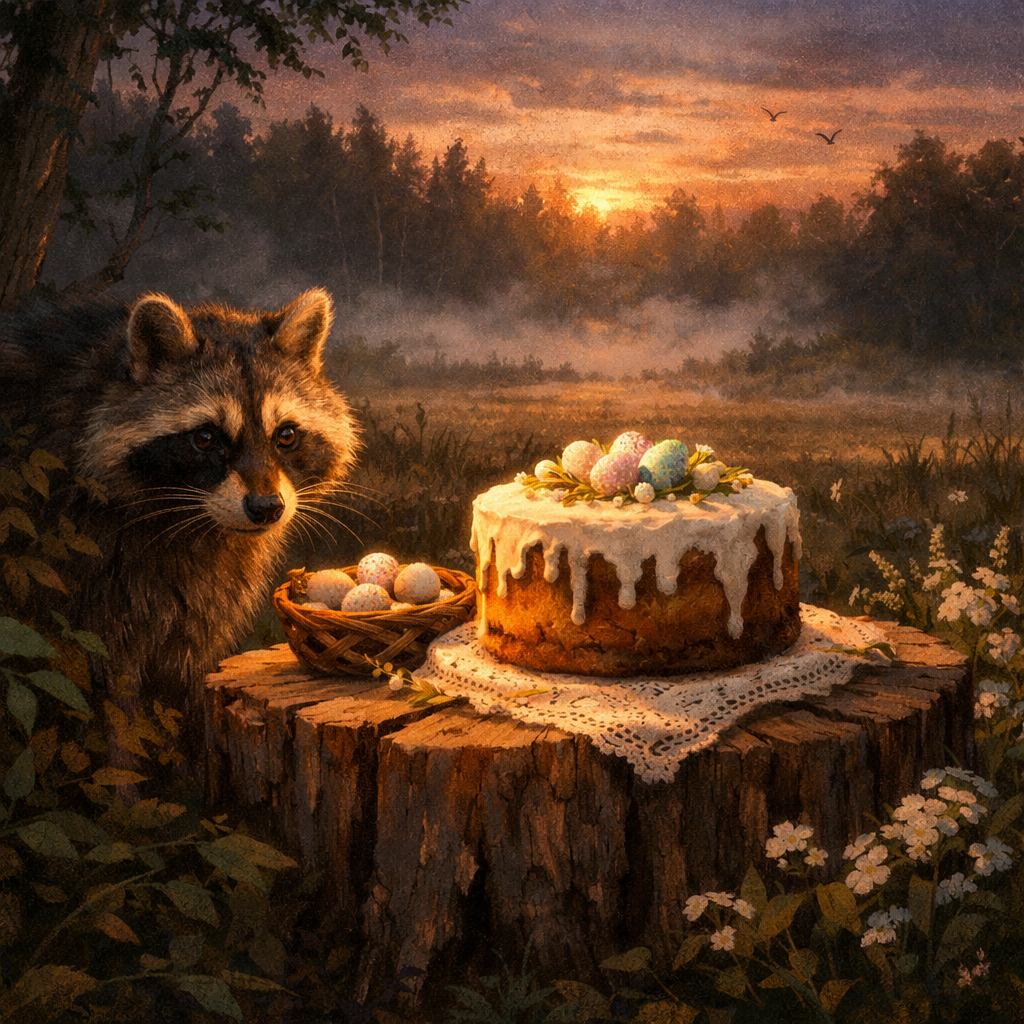 And when the guardian arrives, the exchange is said to begin.
🍰 The Offering Ritual
Tradition speaks clearly:
- The offering must be homemade, crafted with care and patience.
- It is to be placed outdoors, ideally in a place where nature still lingers.
- It must be left unattended, as the act requires trust.
- And most importantly—it must be given without expectation of return.
…but fate itself that accepts it.
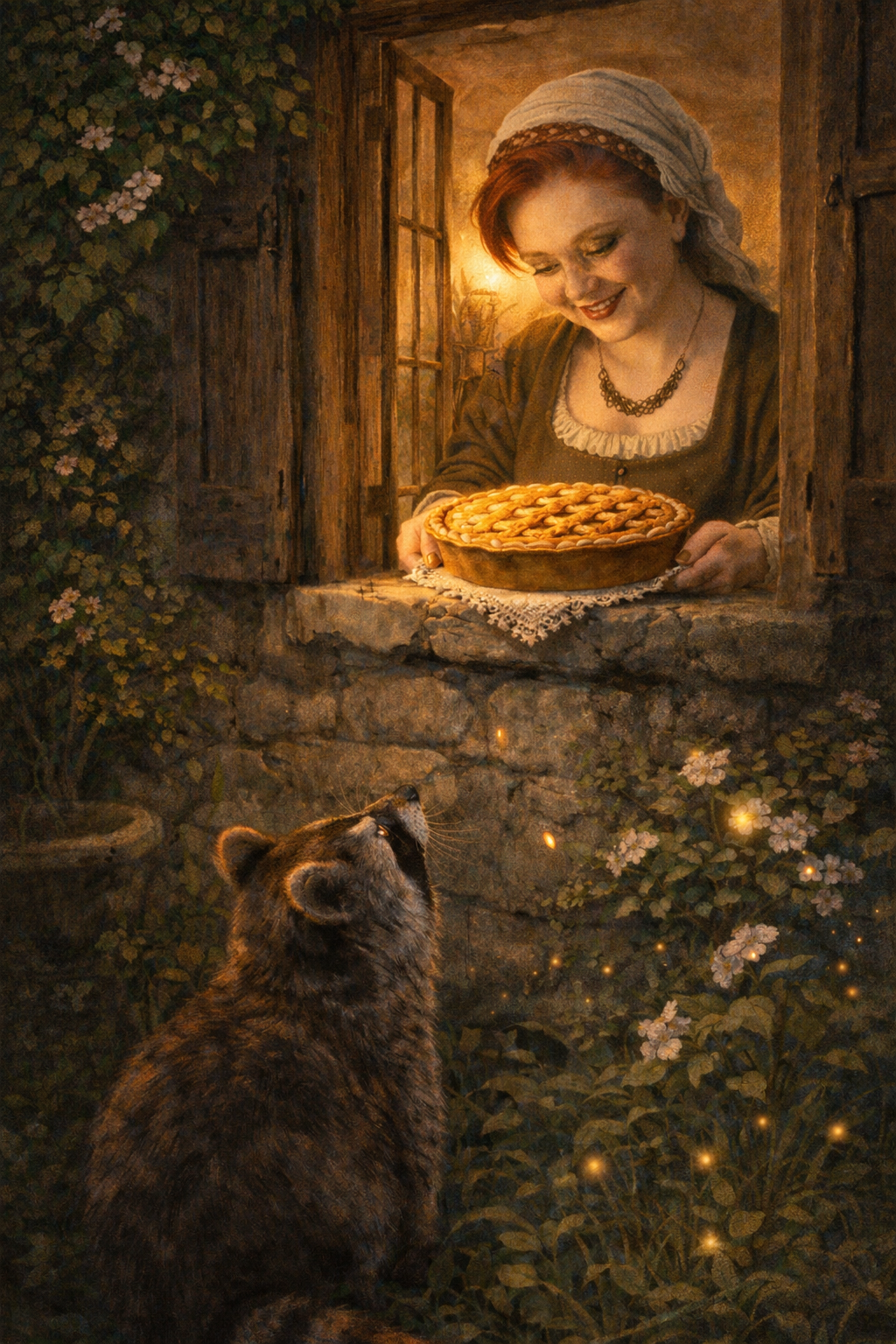 The earliest tales describe a simple act: a handmade gift, a waiting creature, and trust in what follows.
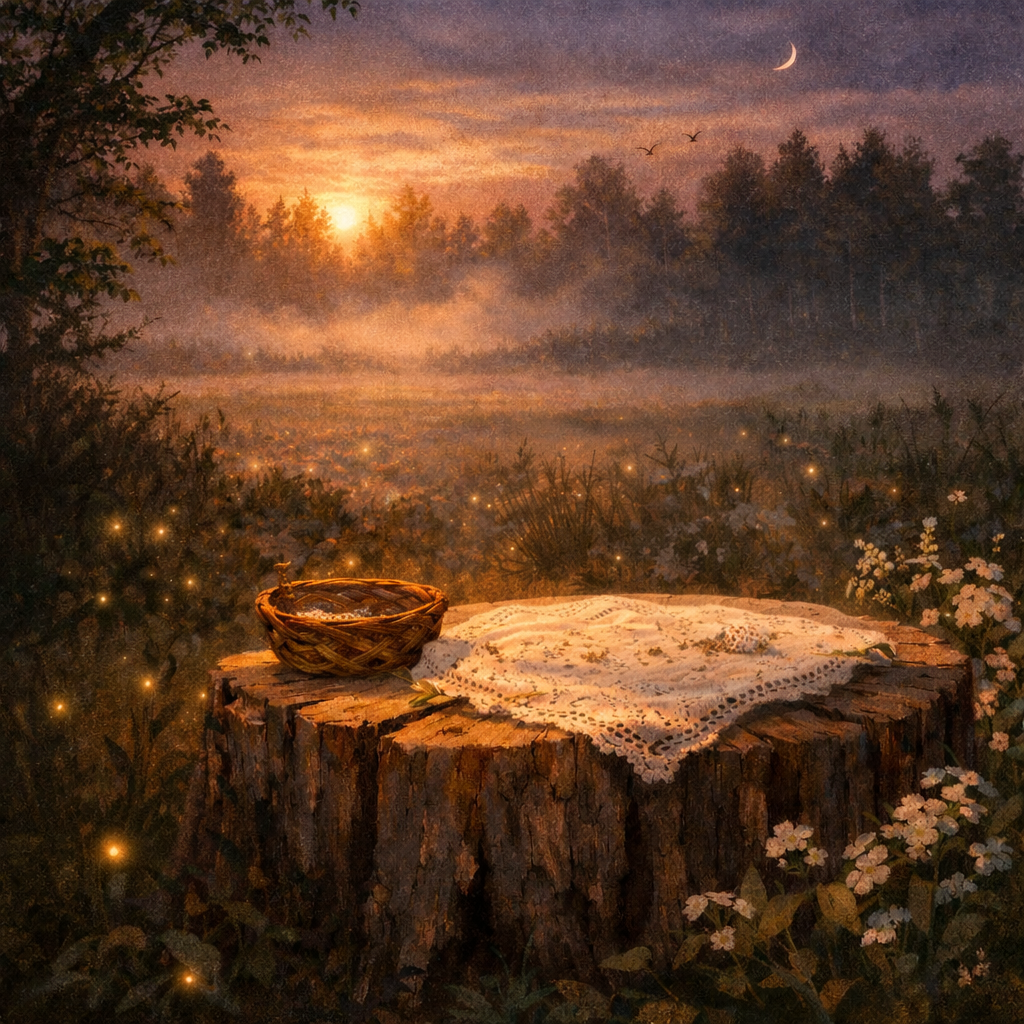 When morning comes and the sweetness is gone, the rite is considered fulfilled.
🌕 The Meaning Behind the Loss
In many stories, those who awoke to find their offering gone would feel a brief moment of confusion— perhaps even frustration.
But the elders would remind them:
“What is taken was never lost. It was exchanged.”The missing cake, the vanished bread, the stolen sweetness—these were seen not as theft…
…but as confirmation.
✨ The Blessing
Those who honored Raccoon Day were believed to receive:
Quiet luck in unexpected moments The strength to endure difficult seasons Opportunities that seemed to appear out of nowhere The ability to keep going when others could not
Some said the blessing could be felt. Others said it simply appeared in time.
The investment is small. The return, according to legend, is immeasurable.
🪶 A Small Price
In modern times, the ritual may seem unusual.
To bake something… only to leave it outside… and have it disappear.
“A small price to pay… for the investment of a lifetime.”🦝 Closing Thought
Whether one believes in such traditions or not, there is something quietly powerful in the idea that:
Effort, when given freely, never truly goes to waste.And sometimes… even a raccoon knows that.